How to Put a Seat Cover on a Car: Step-by-Step Guide
Putting a seat cover on a car might sound easy, but getting a snug, smooth fit takes some care. The right seat cover can protect your car seats, give a fresh look, and even make driving more comfortable. But if you don’t install it well, the cover can slip, bunch up, or look untidy.
This guide gives step-by-step instructions, helpful tips, and practical advice for anyone who wants to put a seat cover on a car—whether for the first time or just looking for better results.
Why Use Seat Covers?
Most car owners want their car to look good and last longer. Seat covers help in many ways:
- Protection: They shield seats from spills, sweat, dirt, and sunlight.
- Style: Covers can upgrade the look of old or plain seats.
- Resale value: Clean original seats mean a higher resale price.
- Comfort: Some covers are padded or made with breathable materials.
Remember, the wrong installation can make even the best cover uncomfortable or unsafe.
Types Of Car Seat Covers
Before installing, it’s important to know what type of seat cover you have. Here’s a quick comparison to help you understand the main differences:
| Type | Material | Main Benefit | Ease of Installation |
|---|---|---|---|
| Universal Fit | Polyester, neoprene, leatherette | Fits most vehicles | Easy to moderate |
| Custom Fit | Neoprene, leather, fabric | Tailored look and fit | Moderate to difficult |
| Semi-Custom | Mixed materials | Better fit than universal | Moderate |
Universal covers are easier to install, but custom covers look more professional. Check your car’s manual or manufacturer’s site to know which seats you have (bucket, bench, split, etc. ).
Tools And Preparation
Having the right tools makes the job faster and neater. Here’s what you’ll need:
- Seat cover set (check the package for parts like headrest or armrest covers)
- Flathead screwdriver (for tucking covers)
- Scissors (if trimming is allowed by manufacturer)
- Vacuum cleaner (for cleaning before installation)
- Mild cleaner and cloth
- Installation manual (most brands include a guide)
Never rush. A clean, calm workspace means fewer mistakes.
Step-by-step Guide To Installing A Seat Cover
This step-by-step method works for most cars and seat covers. Always check your cover’s instructions first.
1. Remove The Headrests
Start by pulling up the headrests. Most cars have a button or latch. Removing these makes it easier to slide the cover over the seat.
Non-obvious tip: Some modern cars have headrests with wires for airbags or sensors. If you feel resistance, check your manual before forcing them off.
2. Clean The Seats
Use a vacuum to remove dust and debris. Wipe down the seats with a mild cleaner and dry completely.
Why clean first? Trapped dirt can damage your seat or the new cover, and a clean surface helps the cover grip better.
3. Test Fit The Cover
Before fastening, slip the cover loosely over the seat. Check where the seams, straps, and holes line up. Make sure the holes for headrest posts match.
Beginner’s mistake: Skipping the test fit can lead to twisted covers or blocking seat controls.
4. Slide The Cover Over The Seat
Start from the top and pull the cover down, smoothing as you go. Make sure the front is centered and any logos or patterns are straight.
If your seat has armrests or special features, check if the cover has zippers or Velcro flaps for these areas.
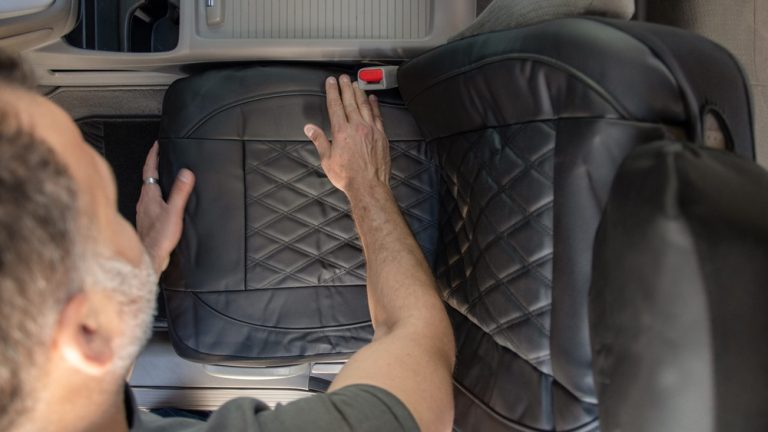
5. Tuck And Smooth
Most covers have flaps or foam “tuckers” that go between the seat back and bottom. Use your hands or a flathead screwdriver to push these through. This keeps the cover from slipping.
Pro tip: Tucking firmly makes the cover look like it was factory-installed.
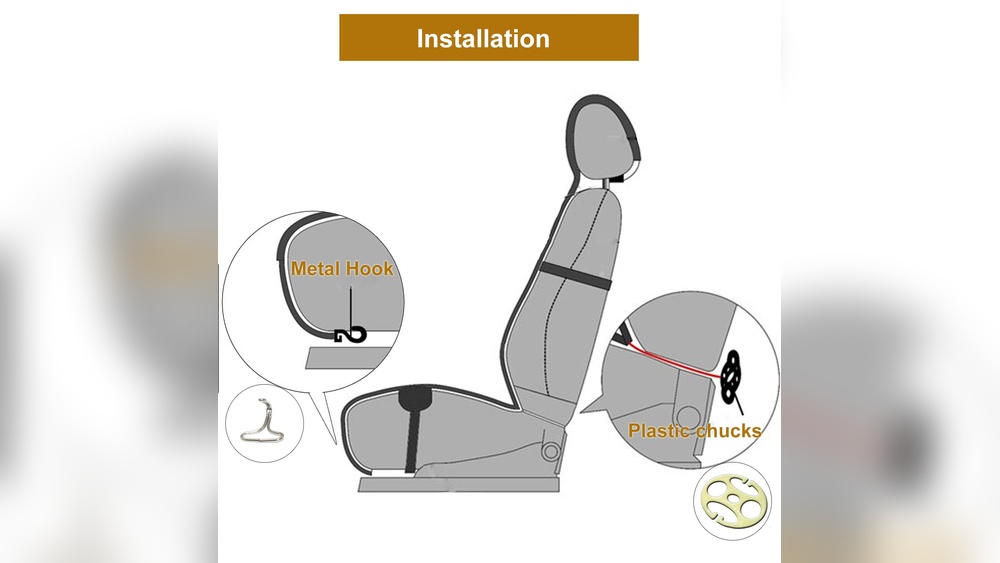
6. Secure Straps And Hooks
Many covers use straps, Velcro, or hooks under the seat. Fasten these tightly, but don’t overstretch. If your car has powered seats or airbags, avoid blocking or tangling wires.
| Fastening Type | Where Used | Difficulty |
|---|---|---|
| Elastic Straps | Under seat | Easy |
| Plastic Hooks | Seat frame | Moderate |
| Velcro | Back and sides | Easy |
| Drawstrings | Seat edges | Moderate |
Beginner’s insight: If straps hang loose, they can get caught in seat rails. Always tuck extra strap material away.
7. Reinstall The Headrests
Cut small slits in the cover only if the manufacturer says it’s safe. Slide the headrest posts through the holes, then lock the headrest in place.
8. Adjust And Finish
Sit in the seat and move it forward and back. Check for bunching, wrinkles, or slipping. Smooth out any folds and tighten the straps if needed.
If your seat has side airbags, make sure the cover is “airbag compatible.” Never install a cover that blocks airbag deployment.
Special Tips For Different Seat Types
Every car is a little different. Here are some special cases:
Split-bench Seats
Some cars have seats that fold down separately. Look for covers with zippers or Velcro that allow for folding. Never block a seat’s folding feature.
Seats With Integrated Airbags
Covers should be clearly labeled as airbag compatible. If not, don’t use them. Airbags can be blocked or slowed by heavy material.
Heated Or Cooled Seats
Check the cover’s manual. Some materials reduce the effect of seat heating or cooling. Neoprene and leatherette often work fine, but thick covers can block airflow.
Common Mistakes To Avoid
Even careful people make these errors:
- Not cleaning seats first. Dirt under a cover can scratch or damage upholstery over time.
- Forcing straps or hooks. This can break the cover or your seat trim.
- Ignoring seat controls. Make sure you can still move the seat, fold it down, or use levers.
- Blocking airbags or sensors. Always check for labels and warnings.
- Not reading the instructions. Each cover brand may have unique steps.

Credit: www.youtube.com
How To Make Your Seat Cover Last Longer
A good cover should last several years. Here’s how to protect your investment:
- Wash covers regularly. Most fabric covers are machine washable—check the label first.
- Vacuum over the cover. Remove crumbs and dust to avoid buildup.
- Check straps every few months. Tighten if needed.
- Avoid sharp objects. Keys, tools, or belt buckles can tear some materials.
When To Replace A Seat Cover
Seat covers don’t last forever. Replace them if you see:
- Large tears or holes
- Fading or cracking, especially from sun
- Stains that won’t come out
- Loose or broken straps that can’t be fixed
Sometimes, a new cover is cheaper than repairing the old one.
Comparing Popular Seat Cover Materials
Choosing the right material is just as important as installation. Here’s a quick look:
| Material | Durability | Comfort | Ease of Cleaning | Price Range |
|---|---|---|---|---|
| Neoprene | High | Good | Easy | $$ |
| Leatherette | Medium | Medium | Easy | $$ |
| Cotton/Fabric | Medium | High | Moderate | $ |
| Genuine Leather | High | High | Difficult | $$$ |
Neoprene is very popular for families and pet owners because it’s waterproof and durable. Leatherette offers a luxury look for less money than real leather.
Safety And Legal Considerations
Safety should always come first. In some countries, blocking airbags with seat covers can lead to fines or failed inspections. Some insurance policies may not pay out if a non-approved cover affects safety features. Always check local laws and your car’s manual.
For more details on seat safety and airbag compatibility, see the National Highway Traffic Safety Administration website.
Frequently Asked Questions
How Long Does It Take To Install A Seat Cover?
Most people need about 30 minutes per seat for a first-time installation. Custom-fit covers can take longer, especially for back seats.
Can I Put A Seat Cover On Seats With Airbags?
Yes, but only if the cover is airbag compatible. Look for covers with special stitching or tear-away panels. Never block a side airbag.
Will Seat Covers Affect Seat Heaters Or Coolers?
Some thick covers reduce heat or airflow. Neoprene and thin fabrics usually work fine. Always check the manufacturer’s advice before installing.
Can I Wash My Car Seat Covers In A Washing Machine?
Most fabric covers are machine-washable, but always check the care label first. Leather or leatherette covers should be cleaned by hand with mild soap.
Do Seat Covers Fit All Cars?
Universal covers fit most cars, but not all. Some cars need custom-fit covers for a smooth, safe look. Measure your seats and read product details before buying.
Putting a seat cover on a car is a simple way to protect your seats and freshen up your car’s look. With the right tools, careful cleaning, and attention to detail, you can get a neat, safe, and comfortable result.
A little patience goes a long way—so take your time, follow these steps, and enjoy your upgraded ride.